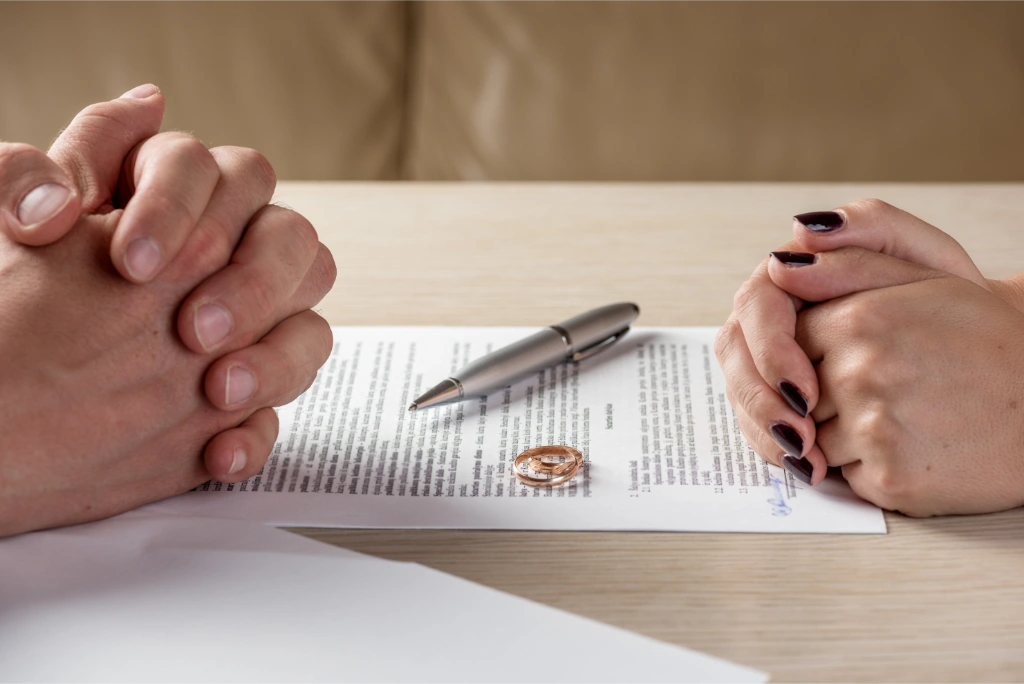
Separation and divorce can affect nearly every part of your life. They can have important implications for property division, decision-making responsibility (formerly called custody), parenting time, and financial matters such as spousal support or taking possession of the matrimonial home.
Understanding your legal rights and options early can help you make informed decisions and avoid complications later.
Key Takeaways: Divorce & Separation in Ontario
- Separation and divorce are not the same. Separation occurs when a relationship ends, while divorce is the court order that legally ends a marriage.
- Most spouses rely on living separate and apart for at least one year as the basis for divorce.
- A divorce order does not automatically resolve parenting, support, or property issues.
- Married and common-law partners generally have different property rights when they separate.
- Full financial disclosure is often essential when resolving support or property matters.
- Many divorces can be resolved without a trial through negotiation, mediation, collaborative family law, or arbitration.
- Early legal advice can help you understand what documents to preserve, which decisions require caution and what resolution process may suit your circumstances.
At Gelman & Associates, we provide legal representation tailored to each client’s individual needs. Whether you are considering leaving a relationship, negotiating a separation agreement, responding to court documents, or preparing for a contested divorce, our family law lawyers in Toronto can help you understand the process and determine your next steps.
To discuss your situation with a member of our legal team, contact us today. Our divorce lawyers in Toronto can assist clients across the province. You can call our Toronto office at (844) 736-0200 now or fill out our online contact form to schedule your consultation.
What is the Difference Between Separation and Divorce in Ontario?
The terms separation and divorce are often used interchangeably, but in Ontario, they actually have different legal meanings.
| Separation | Divorce |
|---|---|
| Occurs when spouses begin living separate and apart because the relationship has ended | Is a court order that legally ends a marriage |
| Does not require a court order | Can only be granted by a court |
| Can apply to married or common-law partners | Applies only to legally married spouses |
| May begin even when spouses continue living in the same home | Usually must follow at least one year of separation |
| Does not allow either spouse to remarry | Allows former spouses to remarry once the divorce takes effect |
| Does not automatically resolve parenting, support, or property issues | Also does not automatically resolve related family law issues |
Spouses can be separated while continuing to live under the same roof if their conduct shows that the relationship has ended.
A written document is not required to become separated. However, a carefully prepared separation agreement can provide clarity about the date of separation and the spouses’ ongoing rights and responsibilities.
Key Issues Gelman & Associates Can Help You Resolve
Every family is unique, but most separations in Ontario involve a few core issues. We can help you understand how each of these may apply in your circumstances.
Parenting Arrangements And Decision-Making Responsibility
If you have children, you will need to consider where they will live and how major decisions about their lives will be made. Recent amendments to the Divorce Act use the terms “parenting time” and “decision-making responsibility” instead of “custody” and “access,” with a focus on the best interests of the child.
Our divorce and separation services in Ontario include assistance with:
- Parenting plans and regular schedules
- Schedules for holidays, school breaks, and special occasions
- Decision-making arrangements
- Developing communication guidelines between co-parents
- Relocation and travel standards
- Parenting disputes involving safety or family violence
- Making changes to existing parenting agreement or orders
- And more
Child Support
Both parents have a responsibility to support their children, even after they are separated or divorced. Child support is generally determined using the applicable Federal Child Support Guidelines, although additional considerations can arise when income is difficult to determine, a child has special Section 7 expenses, or parenting time is shared.
Our Toronto child support lawyers can explain how income, parenting arrangements and special or extraordinary expenses may affect support.
Spousal Support
Spousal support is not automatic in every separation. Entitlement, amount, and duration can depend on several factors, including the length of the relationship, the spouses’ roles during the relationship, income differences, economic disadvantage and existing childcare responsibilities.
The Spousal Support Advisory Guidelines may assist with estimating potential ranges, but they do not replace advice based on the specific circumstances. Instead, our Toronto spousal support lawyers can assist with claims, responses, negotiations, and support reviews during your divorce.
Division Of Property and the Matrimonial Home
For married spouses in Ontario, property issues are generally governed by the Family Law Act. The legislation establishes rules concerning equalization of net family property and provides special treatment for the matrimonial home.
Property rights can be very different for common-law partners. If you are ending a common-law relationship, visit our marriage and common-law family law page for more information.
The Divorce Process in Ontario
A typical divorce may involve the following stages. The steps can vary depending on whether the application includes other family law claims.
1. Determine Whether You Meet the Requirements for Divorce
At least one spouse must generally have been ordinarily resident in Ontario for at least one year immediately before the divorce proceeding begins.
The marriage must also be legally recognized, and the court must have sufficient information about the marriage and any children.
2. Identify The Ground For Divorce
The Divorce Act recognizes marriage breakdown based on:
- Living separate and apart for at least one year
- Adultery
- Physical or mental cruelty that makes continued cohabitation intolerable
Most divorce applications rely on one year of separation. An application may be started before the year has ended, but the divorce generally cannot be granted until the required period has passed.
3. Determine Which Matters Must Be Resolved
Before filing, it is important to consider whether the proceeding will include claims concerning parenting, child support, spousal support, or other relief.
Property claims in Ontario may also be subject to limitation periods. A person should not assume that waiting to seek a divorce will preserve every other family law claim.
4. Prepare and File the Required Court Documents
The required forms depend on whether the divorce is simple, joint or combined with other claims.
Ontario provides family court forms and information through the Ontario Court Services family law forms.
5. Complete Service and Response Requirements
In a sole application, the documents generally must be formally served on the other spouse. The applicant cannot usually serve the originating documents personally.
A joint application follows a different process because both spouses apply together.
6. Address Any Response Or Outstanding Issues
The next steps depend on whether the other spouse responds and whether any claims remain disputed.
A contested proceeding may require financial disclosure, conferences, motions, negotiation and further court steps. An uncontested application may proceed through a document review without an oral hearing.
7. Obtain The Divorce Order And Certificate
A divorce generally takes effect 31 days after the date of the divorce order, unless the court orders otherwise. A divorce certificate can then be requested as proof that the marriage has legally ended.
Is Financial Disclosure Required to Get a Divorce in Ontario?
When you get divorced or negotiate a separation agreement, complete and honest financial disclosure is extremely important. Financial disclosure is the process by which spouses exchange full information about their assets, debts, and income. This transparency is required by law so that separation agreements and court orders are based on accurate information.
To meet financial disclosure obligations, you may need to share:
- Bank statements
- Recent income tax returns
- Pay stubs or other proof of income
- RRSPs, pensions, and investments
- Real estate holdings
- Debts such as credit cards, lines of credit, or loans
You will usually be asked to complete a Financial Statement (Form 13 or 13.1), depending on your situation, and attach supporting documents. You can find official forms on the Ontario Court Services Family Law Rules Forms page.
If a spouse fails to fully disclose assets or debts, there can be serious consequences, including:
- Cost orders or court sanctions
- Unfavourable outcomes in property or support decisions
- Delays in resolving your family law matters
- In some circumstances, a separation agreement or divorce order may be set aside later
Gelman & Associates can guide you through the disclosure process and help you understand what information you may need to provide. We’ll help you gather appropriate documentation and complete a full financial disclosure correctly to protect your rights.
Do You Have to Go to Court to Get Divorced?
Many people may be concerned that contacting a divorce lawyer means they will automatically end up in court. In practice, many separations and divorces in Ontario are resolved outside the courtroom through negotiation, mediation, arbitration or other forms of alternative dispute resolution.
In some situations, a carefully drafted separation agreement may resolve parenting, support, and property issues without starting a court case at all. In others, a court application is necessary from the outset or it might become necessary later.
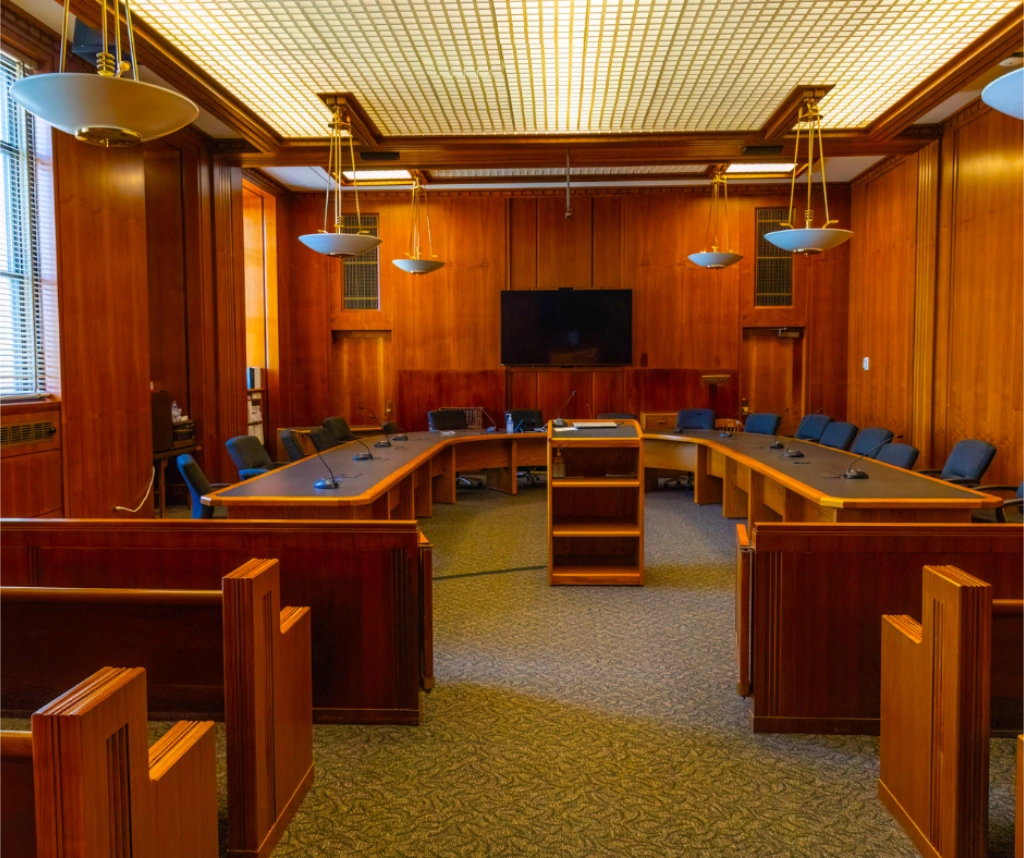
If court is involved, your case may be heard in the Ontario Superior Court of Justice or the Ontario Court of Justice – Family Court, depending on the issues.
Frequently Asked Questions About Divorce and Separation in Ontario
How long do I have to be separated before I can get a divorce?
In most cases, spouses rely on having lived “separate and apart” for at least one year as the ground for divorce. Time can still count as separation even if you are living in the same home, if your conduct shows that the relationship has ended.
Can we be considered separated while living in the same house?
Yes. You may be considered separated while living under the same roof if your daily life shows that the relationship has ended. For example, by living in separate bedrooms, managing finances separately, or no longer presenting yourselves as a couple.
Do I have to get a divorce if we have already separated?
Some couples remain separated long-term without obtaining a divorce. However, you usually must obtain a divorce order if you want to legally remarry another person. Many people focus first on resolving parenting, support, and property issues through a separation agreement and then address divorce as a later step.
Do I need a separation agreement before getting divorced?
A separation agreement is not legally required in every divorce. However, it can help resolve parenting, support, and property issues before the divorce is finalized.
Our legal team frequently recommends beginning to draft a separation agreement prior to your divorce, as a divorce order alone does not automatically settle those matters. By doing so, you can potentially save time and money.
How long does a divorce take in Ontario?
The timeline depends on the type of application, the issues in dispute, the completeness of the documents, service requirements, and court processing.
An uncontested divorce generally requires fewer steps than a contested family law proceeding. No lawyer can guarantee a specific completion date. However, for divorces that are undisputed, the process may take anywhere from a few weeks to several months, while for high-conflict situations, sometimes divorce proceedings may take several years.
How Much Does A Divorce Lawyer in Ontario Cost?
Legal fees depend on the complexity of the matter, the number of disputed issues, the process used, the amount of disclosure required, and the level of cooperation that exists between the parties.
During a consultation, your lawyer can discuss the likely next steps, billing structure, and factors that may affect cost. This way, after your consultation, you will have a better understanding of prices moving forward.
Can One Spouse Refuse To Get Divorced?
A spouse does not have an absolute right to prevent a divorce indefinitely. If the legal requirements under the Divorce Act are met, a court may grant the divorce even when the other spouse does not want the marriage to end.
However, unresolved concerns involving children, support, or procedural fairness may affect how and when the proceeding moves forward.
What Should You Bring To A Divorce Consultation?
Helpful documents may include:
- Any marriage contract, cohabitation agreement or separation agreement
- Court documents or correspondence from another lawyer
- Recent income information
- Tax returns and notices of assessment
- A summary of assets and debts
- Information about the matrimonial home
- A proposed parenting schedule
- A timeline of important events
- A list of your questions and priorities
You do not need to have every document before speaking with a lawyer. A consultation can help you identify what should be gathered next.
Contact Our Divorce and Separation Lawyers Today
The decisions made during separation can affect your children, finances and future long after the divorce is complete. Obtaining legal advice early can help you understand your options, protect important rights and choose an appropriate path forward.
Gelman & Associates represents clients from our North York office in the city and in communities across Ontario in contested and uncontested divorce, separation agreements, parenting disputes, support claims, property division, and many other types of family court proceedings. With over 9 offices operating across the province, we can help you no matter where you reside.
To discuss your situation with a legal professional, call 1-844-736-0200 or complete our online form to book a consultation.
*Disclaimer: This page is provided for general information purposes only and does not constitute legal advice. Family law matters depend on the specific facts of each situation, and laws and court practices may change over time. You should speak with a family lawyer licensed in Ontario for advice about your particular circumstances. For more information about our general terms, please see our Legal Disclaimer.