


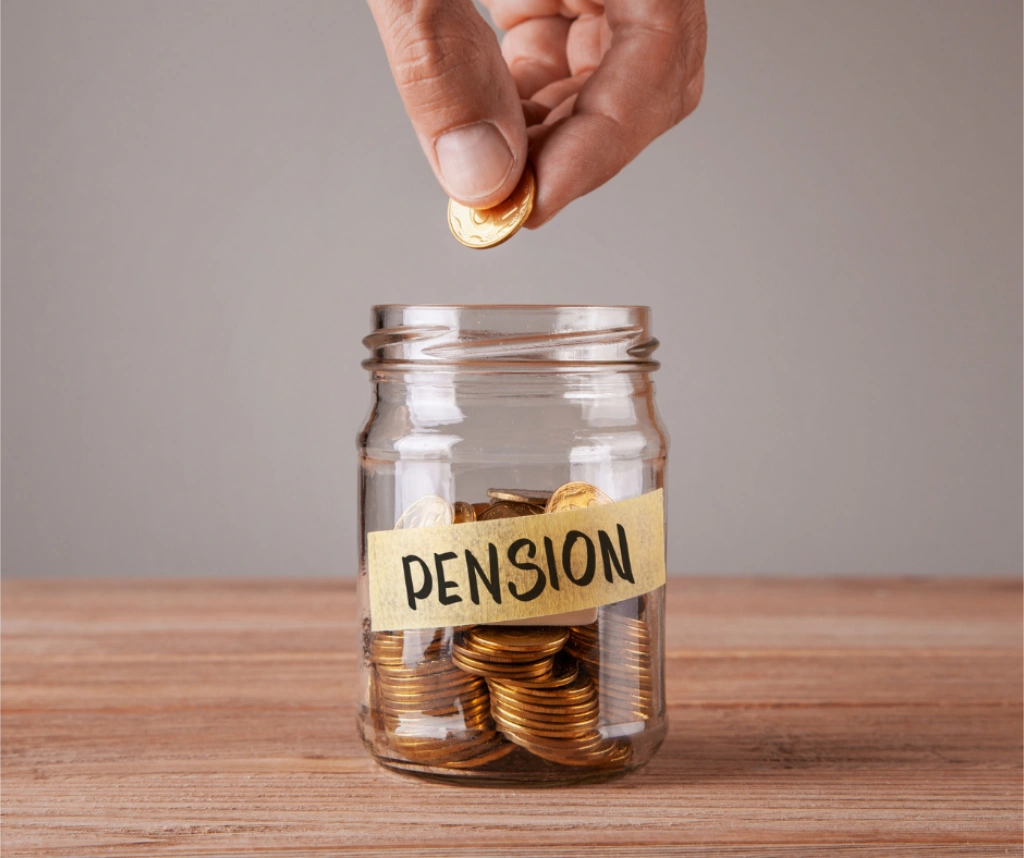
In Ontario, pensions are generally treated as property when married spouses separate or divorce. The value of pension benefits accumulated during the marriage is typically included in the calculation of each spouse’s net family property.
Under Ontario’s Family Law Act, married spouses generally share the increase in their net worth accumulated during marriage through a process called equalization.
This does not necessarily mean that one spouse automatically receives half of the other’s pension.
Instead, pension values are considered alongside other assets and debts when determining the appropriate equalization payment.
Is My Spouse Entitled to Half of My Pension in Ontario?
Not automatically. Ontario’s property division system generally focuses on equalizing the spouses’ net family property rather than dividing every asset equally.
A pension earned during the marriage may contribute to the amount one spouse owes the other.
However, the final calculation may also consider the matrimonial home, investments, savings, debts, and other property.
Depending on the circumstances, spouses may agree to satisfy an equalization payment using other assets rather than dividing the pension itself.
The Financial Services Regulatory Authority of Ontario provides detailed information about how pension division works following a marriage breakdown.
How Is a Pension Valued During Divorce?
For pension plans governed by Ontario’s pension legislation, the plan administrator generally calculates a Family Law Value.
This calculation identifies the pension’s value attributable to the spousal relationship.
Either the pension plan member or their married spouse can generally request a Statement of Family Law Value by submitting the required application and supporting documents.
Other types of pensions, including certain federally regulated plans, may follow different valuation procedures.
A lawyer or financial professional can help determine which rules apply to a particular pension.
Can I Keep My Pension After Divorce?
Yes. It may be possible to retain your pension without transferring part of it to your former spouse.
For example, you and your spouse might agree that one person will keep their pension while the other receives a larger share of another asset.
The arrangement must still account for the applicable equalization obligations.
Whether this approach is appropriate depends on the available assets, their values, and the spouses’ financial circumstances.
Our Toronto property division lawyers assist clients with pension-related equalization issues.
What Happens to a Pension if You Divorce Before Retirement?
When a pension division is authorized by an agreement, court order, or qualifying family arbitration award, the applicable pension legislation may permit a lump-sum transfer to the former spouse’s eligible locked-in retirement arrangement.
For an Ontario-regulated pension, the amount transferred from the pension generally cannot exceed 50% of the Family Law Value attributable to the relationship.
The applicable rules depend on the pension plan and the parties’ circumstances.
Pension division can also have significant tax and retirement planning implications.
Are CPP Benefits Divided During Divorce in Ontario?
Canada Pension Plan credits are addressed separately from employer-sponsored pensions.
Under the federal Canada Pension Plan credit-splitting rules, eligible spouses or former spouses may have CPP pension credits divided following separation or divorce.
The eligibility criteria and application process differ from Ontario’s pension equalization system.
CPP credit splitting should therefore be considered separately when reviewing the financial consequences of divorce.
Speak With a Toronto Property Division Lawyer
Pensions can represent a substantial portion of a family’s assets, making accurate valuations and informed financial decisions important.
At Gelman & Associates, our Toronto divorce lawyers assist clients with pension division, net family property calculations, and financial disputes arising from separation.
Contact Gelman & Associates at 1-844-736-0200 to book a consultation and discuss how your pension may be treated during divorce.