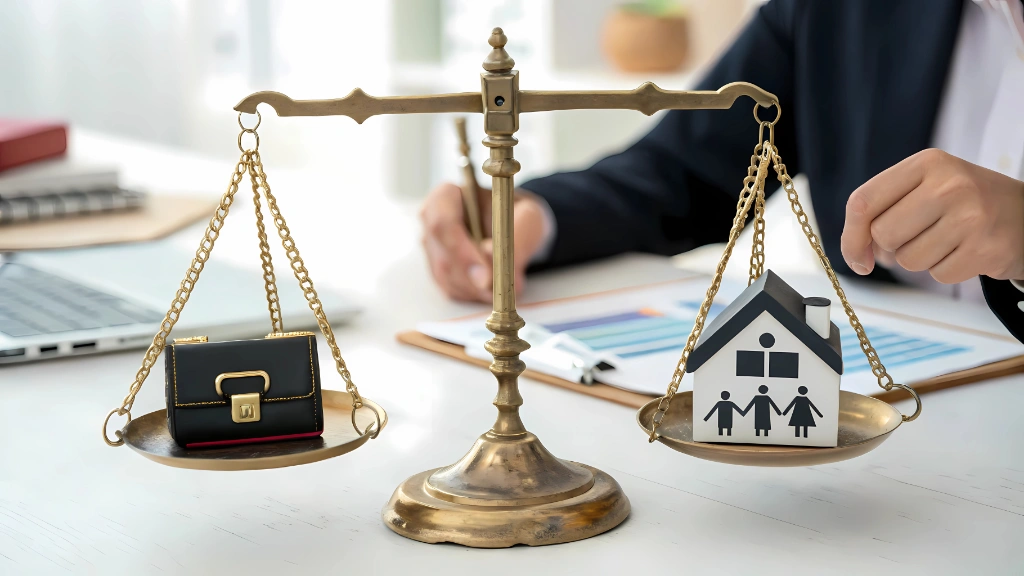



What You Should Know about the Equalization of Property in a Divorce
We spoke with Claire McDowell, a family lawyer with Gelman & Associates, about what you should know about the equalization of property in a divorce. Please note that this article is intended as an overview on a subject in family law, and is not intended as legal advice. For legal advice regarding matters of divorce, we recommend you schedule a consultation with an Ontario family lawyer. Contact us to schedule a consultation with Gelman & Associates today.
What Is Property Equalization, and How Does It Work in Ontario?
Because married couples often share finances, property, and other assets, it can be challenging to determine how those assets are divided when the relationship ends. Property equalization in Ontario is a process intended to place both former spouses in an equal position regarding the net profits of their marriage.
The first step in an equalization process involves calculating each party’s net family property value. This may be determined by subtracting the value of a person’s assets and liabilities at the beginning of the marriage from their value at the end of the marriage. Assets may be tangible, such as the matrimonial home, vehicles, or other physical properties, and they may be intangible, such as sums of money in the bank, RRSP, RESPs, bonds, or other investments.
The difference between the two net family property values is then calculated. The equalization payment is an “equal split,” or half, this difference. The person with the higher net family property value may therefore pay half the difference to the party with the lower family property value. For more detailed examples, and an overview of how this might take shape in your case, contact our Ontario family lawyers today for a consultation.
Equalization as a Starting Point in Division of Property
The equalization of property may be one of many pieces that a divorcing couple navigates over the course of their separation. Where children are involved, matters of access and decision-making responsibility may arise. In some cases, spousal support may be a factor. Equalization can offer each spouse a starting point for better understanding their individual financial circumstances, from which they might make informed decisions.
At Gelman & Associates, we are dedicated to providing tailored insights based on careful understanding of each client’s individual needs. Whether this means negotiating a particular division of property to represent sentimental attachments, or helping to balance property with other needs, our team would be happy to discuss the possibilities in your particular case.
How Are Assets and Debts Valuated for Equalization Purposes?
The way in which assets and debts may be valuated for equalization purposes can depend on a range of factors, including the nature and complexity of the property. In many cases, you may not need to hire a professional to conduct the valuation.
For businesses you and your former spouse have shared, a professional valuation from an independent third party is likely required. For homes, you may be able to request a realtor’s valuation, or you might hire a valuator to come on and assess your property based on its market value at the time of your separation.
Many questions may arise in the equalization of a home. Not only might the market value of the property be relevant to how equalization is calculated, but the structure of the marriage itself may have an influence. It may be significant whether the couple had kids, whether they had a prenuptial agreement, whether one parent paused their career in order to take care of the family.
When you work with our Ontario family lawyers, we strive to clarify the nuances and possibilities of family law, and guide you towards a result that is in your best interests.
Options for Resolving Property Equalization Disputes
Where possible, it is often best for separating partners to seek amicable agreement on the terms of their divorce. Sometimes, a separating couple may go to mediation, where an impartial third party might help clarify what each person wants, and attempt to facilitate an agreement. Mediation can be a valuable resource in finding what you and your former spouse want, and where you may have common ground. At the end of a mediation process, you may come to an articulated list of terms that can underpin your separation agreement.
The next step may be to consult with an Ontario family lawyer, who might help finalize negotiations, conduct the financial disclosure and exchange, and ensure that you are proceeding with the resources you need in order to make informed decisions.
In some cases, a separating couple may encounter disputes they are unable to resolve through mediation or other forms of alternative dispute resolution. While court can be a long, expensive process, it may be the best possible option where other forms of negotiation have failed. At Gelman & Associates, we may be able to help you through court proceedings, should the need arise.
Contact Gelman & Associates for a Consultation on What You Should Know about the Equalization of Property in a Divorce in Ontario
Equalization of property can be a pivotal step in the financial disentanglement that often occurs during a separation or divorce. To learn more, including how our Ontario family lawyers might make this process easier for you, contact us at Gelman & Associates today and book a dedicated consultation.
Disclaimer: For specific legal advice on your family law matter, please consult with a family law lawyer. The content in this article is not intended to act as legal advice and is instead intended to act as a general overview of a legal topic.