
Gelman Family Law Lawyers

Over 200+ 5-Star Google Reviews

Book Consult

What Does Child Support Cover in Ontario

Published: August 16, 2022

Book Consult1-844-736-0200

Table of Contents

What Does Child Support Cover in Ontario

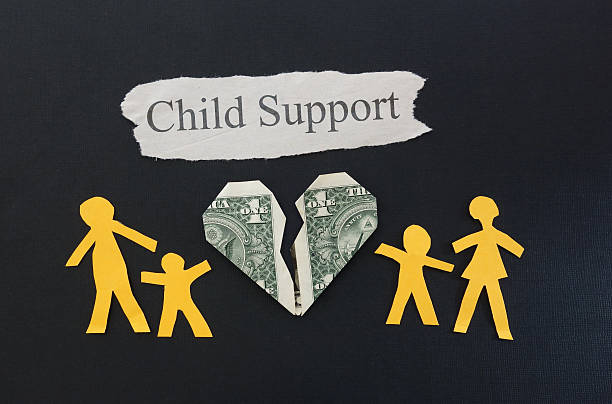
All parents are required to provide financial support to their children.  This obligation applies to all parents whether they are married, in a relationship or not.  Similarly, you are required to support your children whether or not they live with you or there is regularly contact with them.  Child support is a regular, ongoing payment made by one parent to the other for the support of their children.  Under Ontario law, there are guidelines that provide the basis for determining the amount of child support that must be paid by each parent.  The payment is based significantly on the parents’ income and the number of children they have.  This article will outline how child support works in Ontario. 

How Does Child Support Work in Ontario?

 Child support is an obligation of every parent regardless of the family’s living arrangements.  This includes birth parents, adoptive parents, and in some cases, even step-parents.  It is a payment typically made by one parent to the other for the purpose of caring for the parents’ mutual children.   It is made on a periodic and continuing basis until a time outlined by mutual agreement or by court order.  Sometimes the amount of child support is determined by an agreement between the parents in a separation agreement, paternity agreement or some other domestic agreement under the Family Law Act or Divorce Act, but it is often determined by a judge and set out in a court order.  

Who Is Responsible for Paying Child Support?

The Family Law Act and Divorce Act of Ontario define who a parent is and who may legally be required to pay child support.  These individuals include birth parents, adoptive parents, step-parents, and other individuals with a parent-like relationship with the child.  

While it may be obvious that birth parents and adoptive parents are required to financially support their children, in some cases where a step-parent has demonstrated a “settled intention” to treat the child as a member of his or her family, they may be required to make child support payments to the child’s other parent based on a history of support.  

What Is Child Support Supposed to Cover?

Ontario law intends that child support be used to cover the basic costs of caring for a child and providing them with their necessities including food, clothing, school costs, transportation costs as well as a portion of housing and utility costs.  

Further, the Child Support Guidelines state that certain special expenses be considered when calculating child support payments in light of the bests interests of the child and the reasonableness of the expense in light of the parent’s income and previous family spending habits.  These special/extraordinary expenses may include: 

  • Medical and dental premiums;
  • Uncovered healthcare costs;
  • Extracurricular activities;
  • Primary and secondary education costs;
  • Childcare costs resulting from the employment, education, training, illness, or disability of the parent with the majority of the parenting time.

Contact The Family Law Lawyer at Gelman & Associates Today!

Children are entitled to the financial support of their parents within that parent’s means and abilities.  Ontario’s child support guidelines provide the basis for calculating required child support.  Sometimes the parents may use these guidelines to create an agreement governing child support and sometimes a judge will issue a court order on the topic.  In either case, the counsel of experienced family lawyers will provide invaluable assistance as every case has its own unique set of facts and circumstances.  Information about the basics of child support can be found at lisagelman.com. Contact the lawyers at Gelman & Associates to speak to a qualified family lawyer about your child support matter.  

Since every case is different, there may be other factors that affect the outcome of your child support case. Only experienced family lawyers can give you legal advice that’s tailored to your situation. Contact us at Gelman & Associates today!

Written by Lisa Gelman

Senior Lawyer

Senior Lawyer Lisa Gelman has over 25 years of family law experience and founded Gelman & Associates to provide strategic legal counsel in family law matters concerning divorce, parenting, separation, and more.

Frequently Asked Questions - child support

The Federal Child Support Guidelines are in place to dictate a fair amount of child support, and generally courts are inclined to follow the guidelines strictly. The guidelines employ a mathematical formula taking into consideration the support paying parent’s annual income and the number of children and provide an amount. The general rule is that the guidelines should be adhered to.  There are a few circumstances, however, which permit a court to deviate from the Child Support Guidelines. Examples are as follows:

Where the person seeking child support is not a biological parent but rather one who stands in place of a parent. This means that a divorcing step parent could be ordered to pay child support to his or her step-children if that spouse stood in the place of a parent during the marriage. According to the Divorce Act, a spouse “stands in place of a parent” when his or her conduct manifests an intention of placing himself or herself in the situation ordinarily occupied by the biological parent by assuming the responsibility of providing for the child’s economic and parenting needs. Courts will look at a variety of factors before making this determination.

Where the child is over the provincial age of majority. This is determined by the laws of the province where the child ordinarily resides. If the child ordinarily resides outside of Canada, the age of majority is eighteen years of age.

Where the support paying parent earns an income of more than $150,000 . In cases where the paying spouse makes more than $150,000 per year, he or she will be ordered to pay the guideline amount for the first $150,000, and the court has discretion whether to impose a higher amount in child support due to the income earned in exess of $150,000.

In split custody arrangements whereby each parent has custody of one or more of the children. Where split custody exists, the amount of child support is determined by calculating the difference between the amount that each would otherwise pay if a child support order were sought against each of them. In situations where parents earn roughly the same income and each is responsible for the support of a child of the marriage, the court can decline to make any order for child support.

In shared custody or access arrangements where a child spends at least 40 percent of the year with each parent. If shared custody is established, then the court is permitted to deviate from the regular guidelines. Section 9 of the Federal Child Support Guidelines addresses this situation and provides that the court should consider the guidelines amount, in addition to the increased costs of shared custody, and the conditions, means, needs and other circumstances of each spouse and of the children. Section 9 promotes flexibility and fairness and leaves discretion with the judge to consider the circumstances.

Where undue hardship arises and the household income of the party asserting undue hardship does not exceed that of the other household . Simply showing it will be hard to make the payments won’t suffice; to meet this standard you must show that the hardship caused by the payments will by excessive, extreme, improper, unreasonable or unjustified.

For help navigating your child support obligations and/or entitlements, please contact your Toronto divorce lawyer.

Child support is calculated mechanically, considering the parents’ salaries and the children’s location. The amount of child support each parent is responsible for is usually calculated using their total gross income according to line 150 of the tax return, how many children are involved, and their domicile.

In cases involving child support, you must typically serve and file financial disclosure. Financial disclosure is providing facts about your finances to the opposing party and the court, including your income, spending, assets such as property and other valuables, as well as debts.

Yes, it may be possible for you to pay for child support directly to your child, but it’s worth noting that this only happens in rare cases. Usually, you’re obligated to pay it to the other parent.

If you’re facing child support issues, your lawyer might refer to the Federal and/or provincial or territorial guidelines to assess what rules would apply to your situation.

In Canada, you’re obliged to pay for child support until the dependent reaches the age of 18 or until the child becomes independent or feels that they have reached a sense of maturity.

There are three main factors to consider in computing child support in Ontario:

  1. The paying parent’s income;
  2. Province where the paying parent is residing;
  3. Number of children the paying parent is supporting;

In addition to the above, the amount of child support from the paying parent may be adjusted based on the parenting agreement. If the parents have a parenting agreement that provides that the child or children are with either parent at least 40% of the time, then both parents’ income may be considered.
Further, the Child Support Guideline in Ontario and the Child Support calculator must be consulted in determining the amount of child support that the paying parent must give.
It must be noted that in Canada there are no States. Instead, there are Provinces. The Province where the paying parent is located will be a determining factor on which table or guideline will be used. i.e. if the paying parent resides in Ontario, then the Child Support Table in Ontario will be used in determining the amount of child support; if the paying parent resides in a different province in Canada, then the Federal Child Support Guideline in the province where the paying parent ordinarily resides will be used in determining the amount of child support; etc.

Parenting arrangements affect child support. Under Section 9 of the Federal Child Support Guidelines:
“Where a spouse exercises a right of access to, or has physical custody of, a child for not less than 40 percent of the time over the course of a year, the amount of the child support order must be determined by taking into account:
(a) the amounts set out in the applicable tables for each of the spouses;
(b) the increased costs of shared custody arrangements; and
(c) the conditions, means, needs and other circumstances of each spouse and of any child for whom support is sought.”

Locations We Serve

Multiple offices to help serve you better

With numerous offices across Ontario, we make it easier for our clients to have access to our lawyers. Please note that offices marked with an (**) are satellite offices and require a consultation booked in advance. We are not able to accommodate walk-in appointments at these locations. Call us to book a free consultation today.

Still have family law questions?

Speak to a lawyer

If you need legal advice regarding child support matters in Ontario, contact our Toronto family law lawyers for a free consultation. Some conditions may apply.

Book Your Consult