
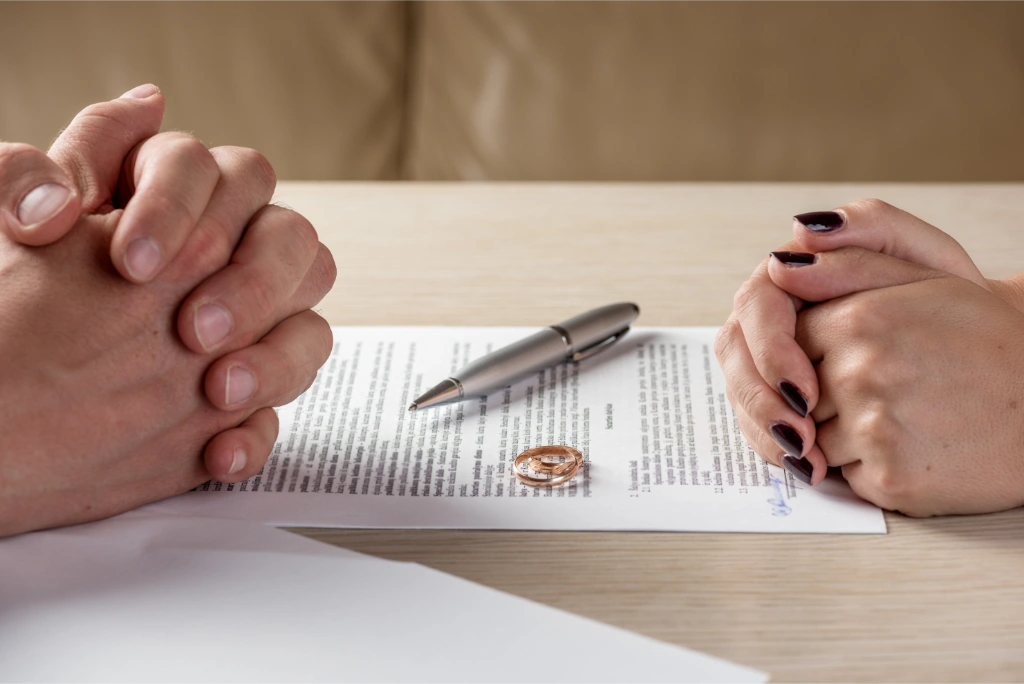
We spoke with Claire McDowell, a family lawyer with Gelman & Associates, about the impact of divorce on children. Please note that this article is intended as an overview on a subject in family law, and is not intended as legal advice. For legal advice regarding matters of divorce, we recommend you schedule a consultation with an Ontario family lawyer. Contact us to schedule a consultation with Gelman & Associates today.
How Divorce Affects Children
While it may very much be the right choice, divorce often has profound short and long-term effects on children. In the short term, it is a fundamental change in the family structure. The parents may no longer be living together. Depending on the parenting plan, the child may see one parent less than they had before. Every divorce is different, as is every child. What is right in your particular circumstances may look very different from what is right for another family.
The best interests of the child are the priority (discussed in an overview of the child’s best interests in family law). While divorce is challenging, it may be the best choice when it comes to a child’s best interests. If the relationship is causing stress and anxiety for the parents, it is likely to cause stress and anxiety for the child.
Of the legal practice areas, family law is particularly emotional. It is a matter of a person’s life, their family, and potentially their community. The stakes of a separation can be particularly high when children are involved.
When you work with one of our Ontario divorce lawyers, we may be able to help you compartmentalize the issues. While holding the complexity of your feelings, we may be able to help clarify actionable steps within your divorce process.
Common Reactions Children Have to Divorce
Sometimes, children react to the news of a divorce with anger and sadness. Sometimes children blame themselves, worrying that the divorce is their fault. Sometimes children hardly react at all – perhaps they have known for a long time that their parents are unhappy together, and the situation may actually become easier after they divorce.
If the parents engage in harmful forms of conflict around the children, the children may mirror those behaviours in other aspects of their lives. Children who have been doing well in school may stop doing well. Children who were previously expressive may become very quiet and unwilling to share their feelings.
If there is domestic assault present within the parental relationship, children may receive the lesson that violence is a means of solving problems, and begin to exhibit violent behaviour at school. Just about any form of response is possible, because the circumstances of the family, the parents, the child, and the divorce can vary vastly.
One of the most important ways parents can support their children through this very difficult time is to try to proceed through the separation with as much grace as possible. Do not speak negatively about your ex, and try to maintain a responsible co-parenting relationship as you end your romantic partnership. Seeking counselling may also be an excellent idea, as therapy can be a safe space for you to explore your feelings away from your ex and children.
If there is a protection issue, and you are concerned about the other parent doing something unsafe, then co-parenting may not be a viable option. Whatever your circumstances, book a consultation with our Ontario divorce lawyers to discuss what steps may be right for you.
Age-Specific Effects of Divorce on Children
Parents are usually the constant in a child’s life, and a divorce inevitably changes this. Divorce may be the best choice given the circumstances, and children are very adaptable in the long run. However, they will likely have responses to the separation.
Very young children, up to school age, may respond to divorce with regressions in their behaviours. A child who was previously potty-trained may start to have accidents. A child who was sleeping through the night may start waking up more often. Young children may become more “clingy” to their parents.
From school age to teenage years, children begin to have more social ties, and the parents’ influence decreases. Therefore, a child’s response to a divorce may be influenced by their peers’ experiences. If a child has friends whose parents have divorced, they may have social supports to help ease the process. If a child does not have external supports, they may have a more difficult time. Common outcomes may involve grades slipping, and/or behavioural changes outside the home.
As a child grows into a teenager, they gain insight and autonomy. They may rebel against parents and rules. Sometimes the rebellion may be warranted, particularly if the parents are continuing to negotiate an older teenager’s schedule and living arrangements without consulting them.
The Court’s hands are tied in this regard: when a child is under the age of eighteen (18), the parents may hold decision-making responsibility. However, the reality is that teenagers are becoming adults, and are entitled to make certain decisions. It may be best at times for parents to trust that they have raised their children to make reasonable choices, and to take a step back and let the teenager have some autonomy.
Potential Long-Term Effects of Divorce on Children
Parenting is an ongoing process, and it is cyclical. We learn to parent from our parents, who learned from theirs, and so on. We instill lessons in our children that they may enact with their own children one day. Therefore, it is important to examine our own learned behaviours, and strive to model positive ways of navigating the challenges of life.
A child who sees their parents trying to practice compassion and collaboration through a separation may enact those lessons in their future. With mindful commitment to self-care, grace, and patience, cycles of generational trauma can end.
Divorce is often profoundly painful, and there is no single “right” way to proceed. Wherever you may be in your divorce and/or separation, our Ontario divorce lawyers are happy to talk. Book a consultation with our team at Gelman & Associates today to learn how we may be of service to you.
Contact Gelman & Associates for a Consultation on Exploring the Impact of Divorce on Children
If you would like to learn more, or discuss the specifics of your case involving the impact of divorce on children, contact us at Gelman & Associates and schedule a consultation today. We have offices across Ontario in order to provide our clients with better access to justice.
Disclaimer: For specific legal advice on your divorce matter, please consult with a divorce lawyer. The content in this article is not intended to act as legal advice and is instead intended to act as a general overview of a legal topic.